

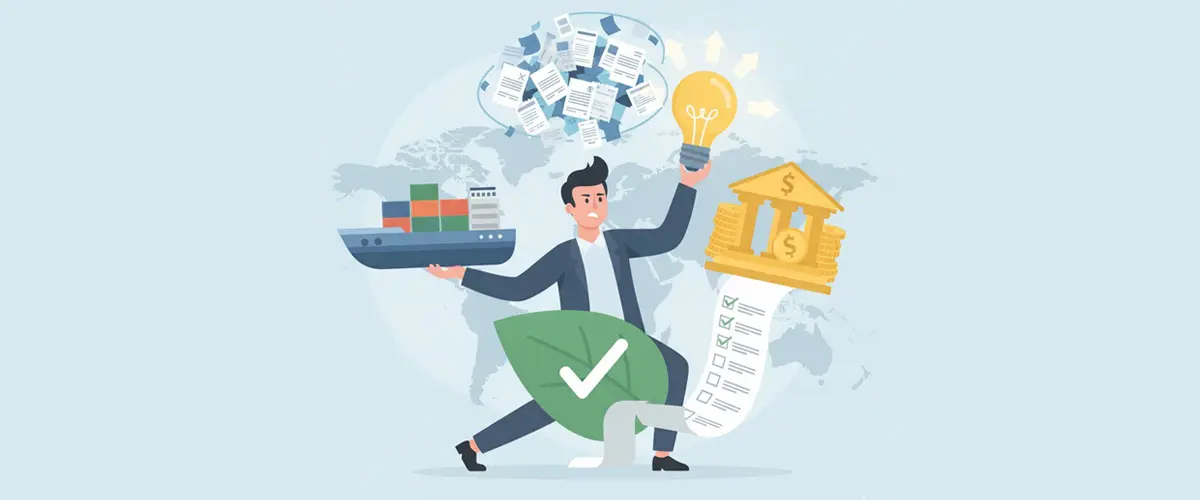
Small and medium-sized enterprises (SMMEs) continue to anchor global trade.. They represent the vast majority of exporters and importers by number, create local jobs, and keep regional supply chains connected to the world..
According to the World Bank, small and medium-sized enterprises account for around 90% of businesses globally and over half of employment, underscoring that when smaller firms struggle, economies feel it..
Yet in late 2025, the headwinds facing SMMEs are unlike anything seen in decades.. The world is not in crisis, but in constant flux, shifting freight rates, unpredictable policy cycles, new digital trade requirements, and tighter access to credit..
These pressures affect all exporters, but for SMMEs the impact runs deeper because they operate with thinner margins, shorter planning horizons, and less room for error..
Here are five key challenges shaping the reality of small exporters and importers today, and why they matter more than ever..
-
Rising logistics volatility and shrinking control
Freight rates no longer swing as wildly as they did during the pandemic years, but volatility has become permanent.. Seasonal spikes, carrier alliances reshuffling capacity, and regional disruptions continue to create uncertainty in transit times and landed costs..
Large shippers can mitigate this with volume contracts, diversified routing, and in-house logistics teams.. SMMEs, however, have far less leverage..
A delay or cost swing that a multinational absorbs as “variance” can drain an SMME’s profit margin for the quarter.. Limited shipment frequency also means fewer options to reallocate cargo or customers if something goes wrong..
What can smaller exporters do differently..??
- Plan with buffers, not assumptions.. Build realistic lead and payment times into contracts rather than relying on historical averages..
- Use freight forwarders strategically, leveraging their consolidation power to access space or negotiate rates otherwise unavailable to individual shippers..
- Share forecasts with service providers, visibility builds trust, and trust can yield priority when capacity tightens..
-
The squeeze on trade finance
Access to affordable working capital remains the single biggest differentiator between thriving and struggling exporters..
Global lenders are still risk-averse, compliance checks have become more onerous, and anti-money-laundering rules have added paperwork to even small transactions.. Meanwhile, interest rates, though stabilising, are still higher than pre-2020 levels..
For SMMEs, this means cash-flow stress on both sides, paying suppliers earlier while waiting longer for buyers to settle.. Larger corporates can bridge gaps through internal treasury or supply-chain finance programmes; smaller firms cannot..
How SMMEs can respond:
- Negotiate milestone or split payments instead of single-settlement terms..
- Explore fintech trade-finance platforms that underwrite invoices faster and with lighter collateral requirements..
- Use export-credit agencies or development banks where available, many now offer tailored micro-exporter guarantees that reduce lender risk..
-
Documentation and digital transition gaps
The shift to digital trade documentation has accelerated in 2025.. Electronic trade documentation like Electronic Bills of Lading (eBLs), single-window customs systems, and blockchain-based verification platforms are now standard on many corridors..
For large firms, these innovations streamline risk control.. For SMMEs, they can create new barriers, platform fees, fragmented standards, and the learning curve of new systems..
Smaller exporters still dependent on manual paperwork risk falling behind, not because of resistance to change, but because of limited guidance and interoperability between systems..
Bridging the gap:
- Invest in incremental digital adoption, start with e-invoicing or customs portals before moving to full eBL ecosystems..
- Train staff on document integrity, ensuring accuracy before digitisation amplifies errors..
- Partner with logistics providers or banks offering “digital-light” options to ease the transition..
-
Expanding compliance and sustainability requirements
Sustainability and ethical-trade regulations have evolved from optional to mandatory.. Carbon-reporting thresholds are lowering, packaging rules tightening, and human-rights due-diligence requirements spreading across supply chains..
Large exporters can fund dedicated ESG or compliance teams.. SMMEs often rely on general staff to interpret complex reporting frameworks..
The risk is no longer just reputational.. Buyers are increasingly filtering suppliers based on compliance readiness, and smaller firms without traceability tools are being excluded from procurement lists..
Practical ways forward:
- Use shared-service models through industry associations to conduct baseline carbon or ethics assessments..
- Adopt simple data-collection templates rather than waiting for full ESG software systems..
- Stay connected to buyers’ requirements early, so compliance does not become a last-minute scramble..
-
Skills and knowledge fatigue
Perhaps the quietest but most dangerous challenge is human-capital fatigue..
As trade grows more digital and rule-driven, knowledge gaps widen.. Many SMME employees handle shipping, documentation, finance, and compliance simultaneously, often with little structured training.. Mistakes multiply simply because people are stretched thin..
Meanwhile, the pace of policy change in 2025, from digital-signature recognition to customs-data exchange, makes traditional once-a-year workshops obsolete.. Learning must now be continuous..
Strengthening capability:
- Embed micro-learning into regular work routines: short updates, weekly insights, or 15-minute refresher sessions..
- Use partnerships with export councils or chambers of commerce offering subsidised training..
- Invest in awareness culture, where asking questions and sharing updates is encouraged, not punished..
The bigger picture
These challenges, logistics volatility, financing strain, documentation complexity, compliance expansion, and skills fatigue, exist for all exporters.. But SMMEs experience them with less resilience, smaller margins, and fewer hands on deck..
The difference is not just scale, but exposure.. Every delay, every error, every missed regulation matters more when you have five shipments a month, not five hundred..
What gives SMMEs an edge, however, is agility.. They can adapt faster than large organisations once they have clarity and access to the right knowledge..
Final thought
The future of trade will reward those who understand risk and respond early.. For SMMEs, survival in 2025 depends on turning awareness into action, building flexibility into logistics, realism into financing, precision into documentation, responsibility into compliance, and curiosity into culture..
If your business is feeling the strain of today’s trade complexity, HM Business Solutions can help you simplify processes, strengthen resilience, and prepare for the next shift before it arrives..
Let us start with a conversation about where you stand, and how to keep your trade moving with confidence..


Leave a Reply