

When the UK passed the Electronic Trade Documents Act (ETDA) just over two years ago, it was hailed as a breakthrough moment: faster transactions, lower costs, less paper, greener supply chains..
Yet a recent LinkedIn poll by Surath Sengupta (MD & Head of Transaction Banking Products at Lloyds Banking Group and Vice Chair of the ICC Banking Commission) shows why adoption has been slower than expected..
Asked what holds UK businesses back from adopting digital trade documents like electronic Bills of Lading, Promissory Notes and Bills of Exchange, the results were clear:
- Limited understanding – 34 %
- Carrier/bank does not support – 29 %
- Legal jurisdiction issues – 28 %
- Do not see the benefits – 9 %
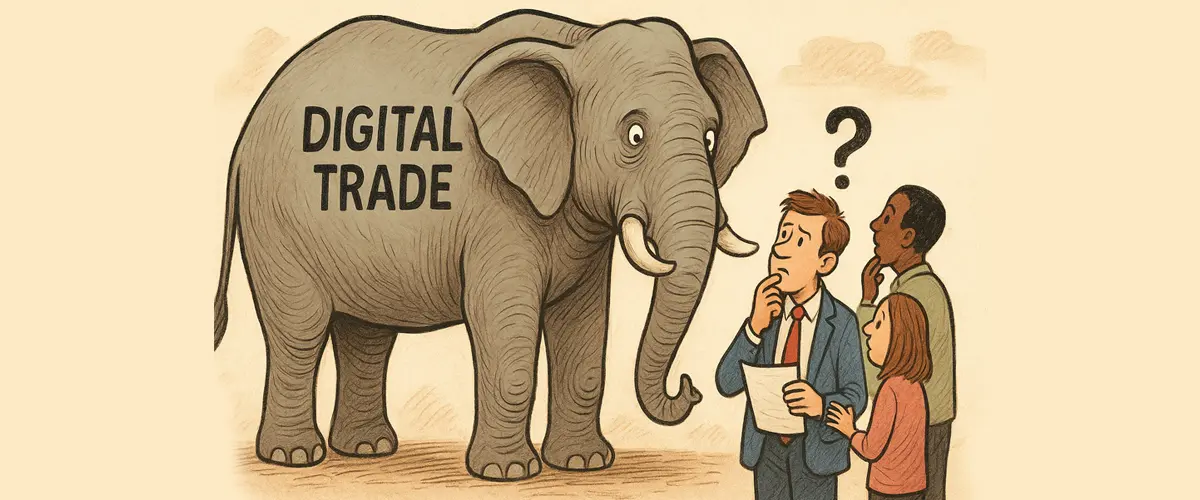
That 34 % “lack of understanding” is striking..
This “lack of understanding and awareness” is something that I have been emphasising as one of the key barriers to adoption of digital trade..
In fact, it is not just a UK-only problem as it affects the entire world of trade..
What global data tells us
- The ICC/FIT Alliance Global eBL Survey (2024) shows adoption of electronic Bills of Lading is rising, but s l o w l y.. About half of respondents still rely on paper or mixed systems..
- The UN Global Survey on Digital and Sustainable Trade Facilitation covering 180+ economies shows big gaps in “paperless trade” readiness.. While some countries score 90 %+ on key measures, many are still below 50 %..
- The World Economic Forum’s TradeTech survey highlights that even large, global firms cite “lack of knowledge” and “limited internal capability” as major barriers to using digital trade solutions..
Taken together, this suggests the UK’s “understanding gap” mirrors a global readiness gap..
Where do you and your country stand..??
- Does your legal and digital infrastructure support electronic trade documents or are you still waiting on enabling laws..??
- Are yours, your carriers, banks, and customs systems interoperable or are you forced back to paper at the weakest link..??
- More importantly, does your business know how to adopt these tools safely and profitably..??
For many markets, the enabling policy is emerging, but businesses remain uncertain how to operationalise it..
How to turn policy into practice
At HM Business Solutions (HMBS), we work with exporters, importers, and logistics providers across regions to close this “understanding gap” by:
- Decoding digital trade rules and frameworks – translating complex regulations like ETDA and UNCITRAL’s work on electronic negotiable cargo documents into clear action steps..
- Implementing secure digital documentation – from eBLs to electronic Letters of Credit, ensuring compliance and interoperability..
- Optimising finance and working capital – linking digital trade flows to faster, lower-risk payment cycles..
- Reducing compliance risk – aligning with carriers, banks, and regulators so your digital transition is accepted and enforceable..
A global call to action
The message is clear: technology and regulation are advancing faster than business capability to use them.. Whether you are in the UK, Asia, Africa, Europe, or the Americas, now is the time to move beyond awareness into practical adoption..
If your organisation is unsure how to transition from paper to digital trade safely, you are not alone, but you do not need to wait..
👉 Connect with HM Business Solutions today to discuss your digital trade readiness and plan your next steps..


Leave a Reply