

For decades, shipping containers have been described as “moving black boxes..” Once cargo was sealed and loaded, visibility was minimal until it reached the other side of the world.. That lack of clarity created delays, uncertainty, and risk especially for small and medium-sized businesses (SMMEs)..
Now, the rise of smart containers is changing this reality.. Powered by Internet of Things (IoT) technology, smart containers are transforming global trade by providing real-time data, seamless monitoring, and predictive insights across the supply chain..
What makes a container “smart”..??
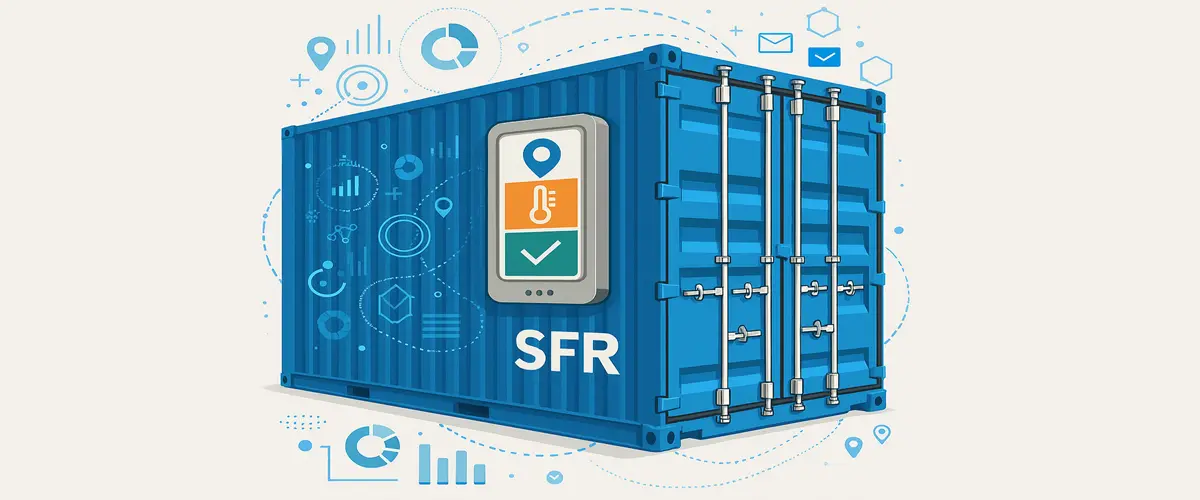
Smart containers are standard containers fitted with IoT devices and sensors that transmit data during transit.. Key features include:
- GPS tracking: Continuous location updates across sea, road, and rail..
- Condition monitoring: Temperature, humidity, shock, and pressure readings..
- Door alerts: Notifications if a container has been opened or tampered with..
- Automated updates: Data flows directly into digital platforms or APIs for real-time visibility..
In short, a smart container becomes a moving data hub bridging the information gap that once defined international shipping..
Why smart containers matter for SMMEs
SMMEs are often more exposed to supply chain risks than large corporations.. Margins are thinner, working capital is tighter, and a single delay can disrupt customer trust.. Smart containers help level the playing field:
- End-to-end visibility removes blind spots along the journey..
- Dynamic ETA updates allow better planning for warehousing and last-mile logistics..
- Cargo integrity monitoring ensures sensitive goods like food, chemicals, or pharmaceuticals remain compliant and safe..
- Early risk alerts allow quick intervention when issues arise..
- Data insights over time help identify delays, bottlenecks, and opportunities for improvement..
Market outlook and adoption trends
Although adoption is still relatively low with fewer than 10% of the global container fleet fitted with IoT devices growth is accelerating.. Analysts forecast that the number of smart containers will grow at an annual rate of over 20% in the next few years..
- The global fleet management IoT market is projected to exceed USD 37 billion by 2030..
- Investments in IoT for shipping are increasing, with companies expecting cost savings of 10–15% through improved efficiency..
- Customers are demanding more real-time visibility, pushing carriers and logistics partners to expand smart container offerings..
Benefits beyond visibility
- Efficiency gains
- Automated updates reduce manual checks, optimise routing, and improve handovers across modes of transport..
- Predictive analytics
- IoT data can be combined with weather, congestion, and traffic information to forecast disruptions and suggest reroutes in real time..
- Cost reduction
- Better equipment utilisation, reduced idle time, and optimised stowage lower operating costs..
- Sustainability
- Smarter routing and energy monitoring reduce emissions and fuel consumption, supporting greener trade practices..
- Security and compliance
- Geofencing and cargo monitoring enhance security while automated records simplify customs and regulatory compliance..
Challenges to consider
- Investment: As per industry estimates, devices cost between USD 100-500 per container, plus maintenance.. Some carriers pass this on as an extra charge per booking..
- Integration: Businesses must decide between using external dashboards or integrating IoT data into their own ERP and planning systems..
- Standardisation: Industry frameworks are still developing, which can cause compatibility gaps between providers..
Despite these challenges, the long-term benefits, greater resilience, reduced costs, and stronger customer trust—often outweigh the upfront costs..
The future of smart containers
Looking ahead, smart containers are expected to become hyper-connected and autonomous, capable of:
- Reporting cargo status, conditions, and location without manual intervention..
- Linking with digital twins to simulate supply chain scenarios and test contingency strategies..
- Supporting green optimisation, reducing fuel use by up to 20% through AI-driven routing..
- Integrating with smart ports, robotics, and automated terminals to accelerate operations..
This is not just about tracking containers, it is about creating autonomous, data-driven supply chains that can respond to disruption in real time..
What this means for your business
For SMMEs, smart containers represent more than just technology, they are a competitive equaliser.. By embracing them, businesses can:
- Improve reliability and meet customer delivery promises..
- Reduce financial and operational risks from unforeseen delays..
- Optimise working capital through more accurate planning..
- Build credibility by offering the same visibility as larger competitors..
Final thought
In the coming years, supply chain visibility will no longer be optional, it will be essential.. Smart containers provide SMMEs with the clarity and agility needed to thrive in global trade..
The smartest move is not just to ship goods, but to ship them smart..
At HM Business Solutions, we work with SMMEs to integrate digital trade tools like smart containers into their supply chains.. We provide advisory on cost-benefit analysis, risk mitigation, and strategies to optimise working capital, ensuring your business is prepared for the next era of global trade..
Contact us today to explore how smart containers can help you build a resilient, efficient, and future-ready supply chain..



Leave a Reply