

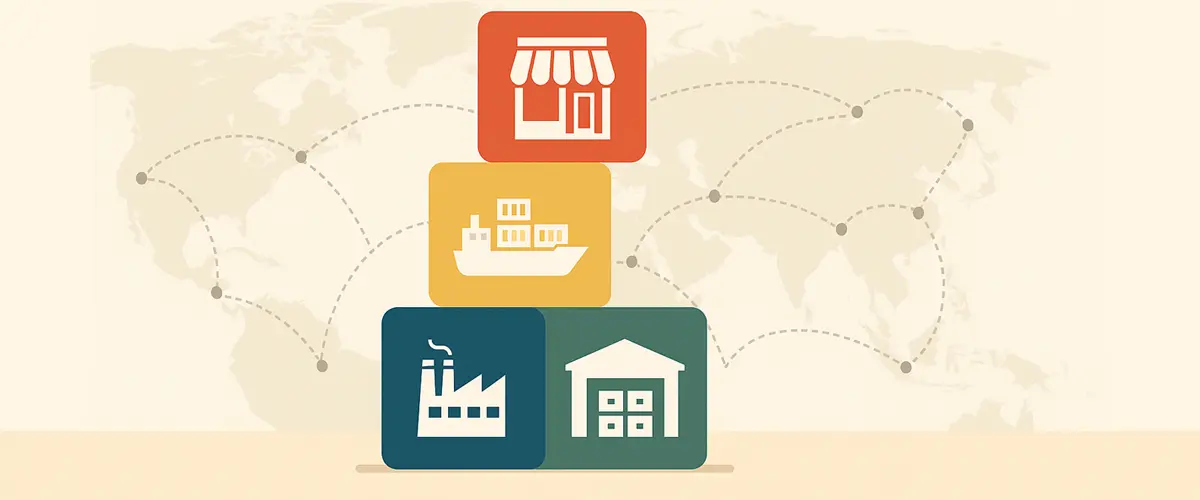
The term logistics is more than just ships, trucks, and warehouses and more than simply moving goods from A to B..
Logistics is the building block that fulfils a trade opportunity by ensuring that the right product reaches the right place, at the right time, and at the right price.. Sounds simple enough, right..??
The reality though is that when goods cross borders, things become more complex, more regulated, and often more expensive if not managed carefully..
For small and medium enterprises (SMMEs), international logistics is not just an operational detail – it is a core part of competitiveness..
Get it wrong, and you risk missed deadlines, unhappy customers, and extra costs that can wipe out your margins.. Get it right, and logistics becomes a value creator that helps you compete with the giants..
Why logistics is more than transport
As Jan Hoffmann and Maxence Orthlieb highlight in their insightful chapter on Logistics of International Trade,
“International logistics creates a trading opportunity by providing the right product, at the right place, at the right time and at the right price. This includes consumer goods as well as producer goods, and it is independent of whether the seller is the producer (e.g. a manufacturer, a farmer, or a mining company) or an intermediary (e.g. a trader or an importer). To create a trading opportunity, four basic functions must be adequately performed:
• provision of, or access to, the goods through production or trading;
• storage;
• transport; and
• marketing the goods.”
Each of these determines whether trade really delivers value – not only what is produced, but where, when, and at what cost..
For SMMEs, this means that logistics cannot be treated as an afterthought.. The way you plan your production, warehouse, and shipping decisions has a direct effect on whether your product is competitive in international markets..
The challenge of crossing borders
Within a domestic supply chain, moving goods is relatively straightforward.. Once you add a border, however, everything changes.. Each shipment is suddenly exposed to multiple legal frameworks, technical standards, and compliance requirements..
Governments regulate logistics to protect national interests.. This means your shipment could be subject to:
- Revenue collection – customs duties, excise taxes, and other fees..
- Safety and security checks – controls on smuggling, hazardous goods, and vehicle inspections..
- Environmental and health regulations – phytosanitary inspections, waste handling rules, and health certifications..
- Consumer protection – product testing, labelling requirements, and quality standards..
- Trade policy measures – quotas, refunds, or preferential treatment under trade agreements..
At border crossings, multiple agencies may be involved: customs, health, agriculture, finance, and even immigration.. Some countries assign all these responsibilities to customs officers.. Others require each ministry to enforce its own rules separately.. For SMMEs, the result is the same: more documents, more checks, and more potential delays..
Transparency matters
One of the biggest barriers to efficient international logistics is lack of transparency.. If you do not know what documents are required, what fees will be applied, or how long procedures take, you cannot plan effectively..
This is why international organisations and trade agreements are pushing for standardisation and digitalisation of trade processes.. Publishing clear information on customs rules, aligning procedures with international standards, and adopting electronic documentation are steps that directly reduce the uncertainty SMMEs face..
Transparency not only lowers cost but also builds trust.. A buyer in another country wants confidence that your product will arrive as promised.. An SMME that can demonstrate reliable, predictable logistics instantly gains an advantage in the marketplace..
Logistics as a strategic advantage
International logistics is not just a technical function.. It can become a strategic differentiator for SMMEs:
- Reliability wins customers – buyers prefer suppliers who can deliver on time, every time..
- Efficiency reduces cost – cutting unnecessary storage or delays frees up working capital..
- Flexibility enables growth – the ability to adapt transport routes or storage options makes it easier to expand into new markets..
- Compliance builds credibility – showing that you meet international standards enhances reputation and reduces risk..
Take, for example, a South African SMME exporting fresh produce.. Speed and storage decisions determine whether the product arrives at destination at peak freshness or loses value on the shelves.. Or consider a small automotive parts manufacturer in Asia whom the auto maker depends on to ensure their assembly line is not disrupted due to delays..
Reliable logistics and transparency around customs clearance could mean the difference between securing a long-term contract or losing out to a competitor..
What SMMEs should focus on
For SMMEs looking to strengthen their international logistics, here are some practical priorities:
- Understand the basics of trade compliance – know what customs, safety, and environmental requirements apply to your product..
- Invest in digital documentation – paper delays shipments; electronic documents speed them up..
- Choose logistics partners wisely – freight forwarders and customs brokers can make or break your cross-border operations..
- Balance cost and reliability – the cheapest option is rarely the best; think about the total cost of delays, not just the freight rate..
- Build visibility into your supply chain – real-time tracking and proactive communication reduce uncertainty and increase customer confidence..
Conclusion: Logistics as an enabler, not a barrier
International logistics is often described as the “plumbing” of global trade – invisible when it works, but painfully obvious when it does not.. For SMMEs, the stakes are high.. Each shipment represents not only a product, but also your reputation, customer trust, and future business opportunities..
By understanding the building blocks of international logistics – and by managing compliance and transparency across borders – SMMEs can turn logistics into a powerful enabler of growth..
At HM Business Solutions, we believe that with the right tools and knowledge, SMMEs can simplify trade, cut hidden costs, and compete globally with confidence..
Contact us today to find out how we can help you simplify trade and amplify success..


Leave a Reply